Let's start with the research
Honestly though, I didn't expect the data to be this clear. Couples who introduce external pleasure tools into their intimate life report higher sexual satisfaction, better communication about desire, and paradoxically, more frequent non-sexual physical affection. This isn't because the toy is magic. It's because the conversation it opens is.
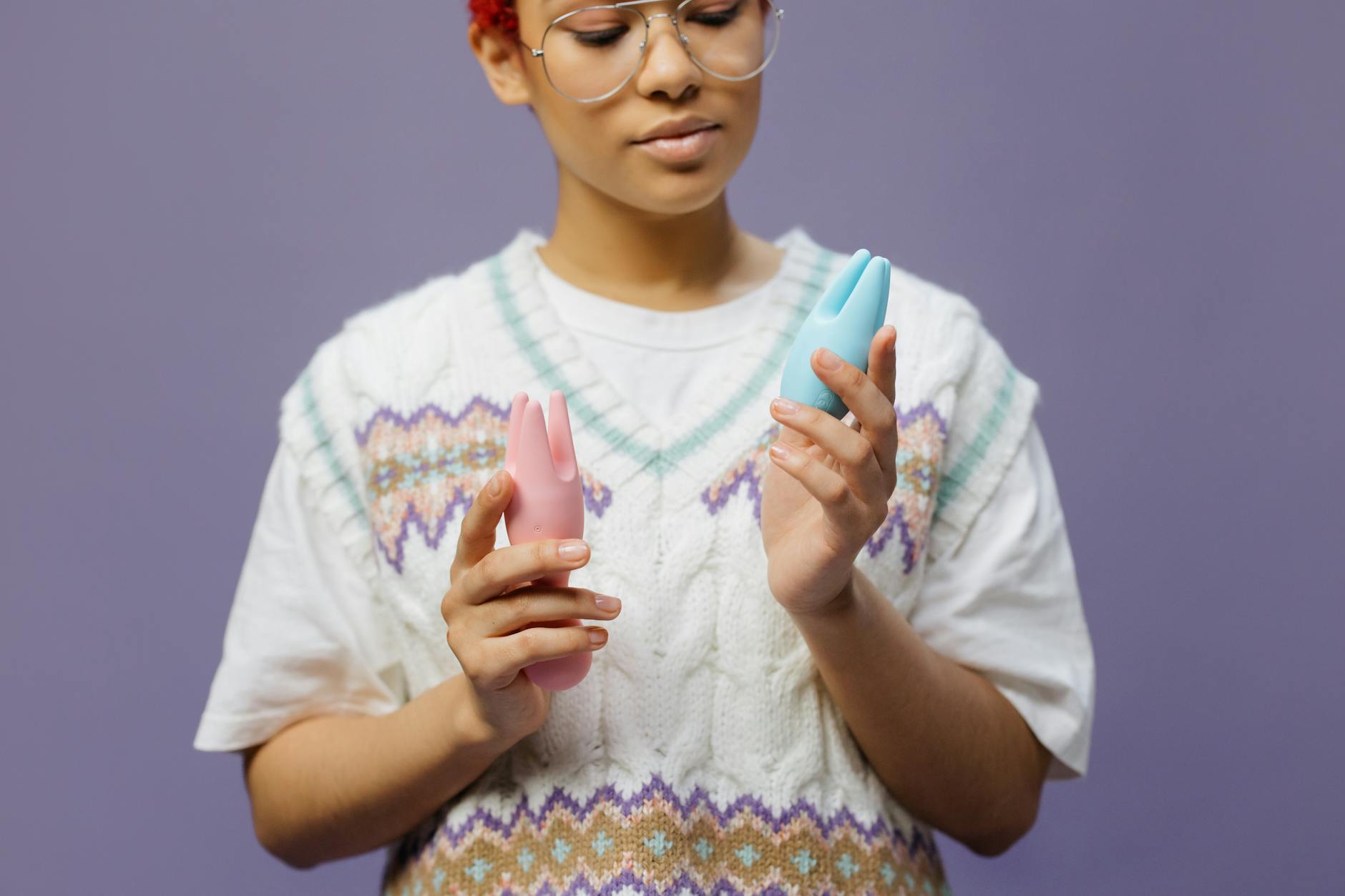
When you hand your partner a lemon clitoral vibrator like the Lem, you're not handing them a replacement for your touch. You're saying something you probably can't say with words: I want your pleasure. I want to understand what works for your body. I want to be part of this.
That conversation, repeated over time, rebuilds intimacy that decades of habit can quietly erode.
The long-term relationship pleasure problem
People stay together for decades for all kinds of reasons: children, shared history, genuine love, inertia, or some complicated mix of all four. What often gets left behind is curiosity about each other's bodies. Not attraction necessarily, but that specific attention you paid in the beginning. The noticing.
Many couples I work with report a creeping sameness. The same positions, the same timing, the same assumptions about what feels good. Over ten or fifteen years, you can become strangers in the dark. You think you know what your partner wants because you've been doing the same thing for so long. You probably don't know anymore. They've changed. Their sensitivity has changed. Their desires have changed. Most couples just... never talk about it.
A toy breaks that pattern because it forces a conversation. You can't hand someone a clitoral vibrator without acknowledging that pleasure exists. You can't ask them to try different settings without implicitly asking: what do you actually want? The toy is just the excuse for the real work, which is paying attention again.
How clitoral vibrators fit into partnership dynamics
Here's what surprises many people: introducing a lemon vibrator often makes sex feel less transactional, not more. In long-term relationships, sex can become a performance metric. Did we do it? Check. Did it feel good? Unclear and also too late to address now.
When you're using a clitoral vibrator together, the focus shifts. It's no longer about "did penetration work as a route to orgasm." It's about "what actually brings sensation right now, for this body, on this evening." That's a completely different conversation. It's slower. It's more attentive. It requires you to look at your partner instead of performing for them.
Many partners also report that using a lemon sucker or clitoral vibrator together relieves performance pressure. If you've been the partner doing the work to create arousal, a vibrator isn't taking your place. It's giving you a partner. You can focus on touch, on kissing, on watching what your partner experiences instead of monitoring your own endurance or technique. Everyone relaxes. Pleasure actually increases.
What makes the Lem specifically useful for couples
I mention the Lem specifically because its suction-based design has a particular advantage in long-term partnerships. Unlike traditional vibrators, which require direct friction and consistent positioning, the Lem works through gentle suction. This means less strain on the person doing the manual work and less discomfort for the receiving partner if their tissues have become more sensitive over time. For people over 40, particularly, this matters. Tissues change. What felt good at 25 might feel too intense at 45. The Lem's variable settings allow both partners to dial in what actually works, rather than defaulting to whatever used to work.
The conversation you need to have first
Introducing a toy into a long-term relationship requires some groundwork. Not dramatic conversation. Just real one.
Start small. Don't launch into "we need to fix our sex life" over dinner. Instead, something like: "I've been reading about this, and I'm curious. Would you ever want to try something new together?" The answer matters less than the question. You're signaling openness. You're removing shame from the subject.
If they're hesitant, that's information too. It might mean they're worried it means they haven't been enough. You'll need to directly address that. "This isn't about you not being good enough. It's about both of us getting to feel better." Or honestly: "I've been curious about this, and I'd rather explore it with you than alone."
If they're interested, the next conversation is logistical. Where do you want to try this? When? Do you want to start with you using it, or them? What are your boundaries? What are you nervous about? This is the part that builds trust. You're negotiating in real time, which is rarely something long-term couples do anymore.
Addressing the fears that come up
Three worries I hear constantly from both partners.
"Does this mean I'm not enough?" Not for anyone who actually cares about their partner's pleasure. Honestly, the opposite is true. You're saying your partner's pleasure matters more than your ego. That's the foundation of good long-term partnership.
"Will they prefer the toy to me?" A vibrator and a person do completely different things. The toy can't hold you after. It can't laugh with you. It can't respond to your mood. It's not a replacement. It's a tool, like a vibrating back massager or a shower head. Some things feel better with help. That doesn't mean the person helping becomes less necessary.
"What if we start this and it's awkward?" It probably will be, at first. You'll fumble with settings. Someone might laugh or feel self-conscious. That's normal. The awkwardness passes if you stay curious instead of shutting down. Many couples tell me that the fumbling was actually the turning point. Laughing together, trying again, figuring it out. That's intimacy rebuilding itself in real time.
What actually happens after you try it
Not every couple finds clitoral vibrators life-changing. Some people prefer things simple. That's fine. But most couples I work with report something surprising: they talk more about sex now. Not because the toy demanded it, but because they broke the silence together. Once you've acknowledged that pleasure matters and you're both paying attention to it, you can't unknow that.
Many report that they feel closer. Not in a spiritually transcendent way. In a practical, nervous system way. You're moving together. You're paying attention. You're being seen. Those are the actual foundations of intimacy in long-term relationships. The toy is just the facilitator.
Some couples find that regular use of a lemon vibrator changes their sexual frequency. Sometimes it increases because it feels better now. Sometimes it decreases because the pressure is off and they actually want it instead of performing it. Both outcomes are improvements.
The real question isn't whether a clitoral vibrator will save your relationship. It won't. But it might open a door that's been quietly locked for years. What you do with that door depends on whether you both want to walk through.
How to choose and use one together
If you're ready to try this, start simple. How to Use a Lemon Vibrator for the First Time covers the mechanics. What matters here is the partnership angle.
Let your partner choose which lemon sexual toy appeals to them. Not you. Them. This is their pleasure. You're supporting it, not deciding it. If they're not sure, start with something versatile. The Lem works across different body types and preferences, which makes it a good entry point for couples exploring together.
When you use it together, check in constantly. "How's that feel?" "Want me to move here?" "Should we try a different setting?" This sounds like a lot of talking during sex, but it's actually relaxing. You're not guessing anymore. You know.
Consider reading Best Lemon Vibrator Settings for Different Body Types together. Not because you need to be experts, but because learning about it as a team builds investment. You're becoming collaborators instead of performers.
The research backs this up
Studies on sexual satisfaction in long-term relationships consistently find the same thing: novelty and communication are the strongest predictors of sustained pleasure. Not frequency, not performance. Novelty and communication. A lemon vibrator is a very small novelty. But combined with the conversation it forces, it's often enough to shift years of quiet disconnection.
What matters is that you're saying: I want to know you again. I want to pay attention. I want your pleasure to matter. Those are the actual aphrodisiacs. The tool is just the messenger.
FAQ: Your actual questions about this
Do clitoral vibrators actually improve intimacy, or is that just marketing?
It's not the vibrator itself. It's the conversation and attention the vibrator creates. Research on sexual satisfaction in long-term couples shows that novelty plus communication is what sustains pleasure, not frequency or technique. The lemon vibrator is the excuse to both.
What if my partner feels threatened or insecure about using a toy?
That's real and common. Start by addressing the actual fear: "I'm not replacing you. I'm inviting you in." Make it collaborative. Let them choose the toy. Let them control it. Take time to build comfort instead of pushing. Some partners need to see it as a tool for their pleasure, not something being done to them.
Is there a "right" way to introduce this conversation?
No perfect script exists, but the principle is consistent: curious, not defensive. Try something like: "I've been thinking about ways we could both feel better. Would you be open to trying something together?" The goal is collaborative exploration, not fixing a problem.
How often should we actually use it?
Whatever works for your partnership. Some couples use a clitoral vibrator every time they're intimate. Others use it occasionally. The frequency matters less than the consistency of the conversation and attention around it.
What if we try it and it doesn't work for us?
That's data, not failure. You tried something together. You communicated about it. That alone is relationship work. If it doesn't fit your dynamic, you move on. The real win was the conversation, not the toy.
Can a lemon vibrator help if the emotional intimacy is broken?
No. A tool can't fix a broken foundation. If there's contempt, withdrawal, or unresolved conflict, a vibrator will feel like adding lipstick to a deeper problem. Couples therapy comes first. A toy can enhance an existing connection, but it can't create one from nothing.
What comes next
Your sex life at year fifteen doesn't have to look like year one. But it can feel intentional instead of habitual. It can be exploratory instead of scripted. That shift, repeated over months and years, is what actually rebuilds intimacy in long-term relationships.
If you're ready to start that conversation with your partner, begin here. Not with the toy, but with honesty about what you both want and whether you're curious enough to find out together. If that resonates, reach out. I work with couples navigating exactly this transition.